
Designing a 21st Century Classroom
“The mind is not a vessel to be filled, but a fire to be kindled” -Plutarch
A classroom design impacts the learning experience for students in significant ways. A teacher must invest time and thought into the different elements that make up a space. Lighting, paint colors, decor, chairs, tables, desks; all these things need to be considered. Are the students facing a teacher (teacher-centered) or are they sitting in groups facing each other (student-centered)?. A classroom design reflects the individual teacher’s philosophy, values, and purpose.
Many questions need to be considered. What message is being sent when students sit in rows of individual desks facing a teacher? What message do I intend to send? What role should the teacher have in the classroom? What skills do students need? Do students need to be able to repeat information and regurgitate knowledge provided to them by a teacher? Or do students need to be able to problem solve, collaborate in groups, seek out relevant information, and create?
The goal of education is to prepare students to become contributing, valued members of society. We want them to possess skills that are relevant to the jobs they will be expected to perform. In many ways, we do not know what the future will look like, but we can already see the trends. It is time to let go of an out-dated industrialized approach to education, and prepare students for a modern workforce, as advocated by creativity expert, Sir Ken Robinson. To ensure that students are prepared for a life in the 21st Century, we must teach them to work collaboratively with others, solve problems
independently, seek out information using digital resources, and be creative makers. Jobs that do not require creative makers and collaborators will be filled by robots. Already we see cashiers being replaced with self-checkout computer systems and car washes that are unmanned automated robots. This trend will continue as robots become cheaper, highly specialized, and easily accessible.
If this is my view, how can I arrange my classroom in a way that reflects my philosophy?
My current classroom has a wall of bookshelves and big traditional desks that are set up in rows most of the time. I often have students rearrange their seats, because I feel there are benefits to different seating arrangements. Some lessons and units work better when students are sitting in groups. When I first started teaching, my class had 13 students. Now my numbers are in the upper 20s. With a class size so large, I find that the desks have taken over our space. We don’t have room to circle up, spread out work spaces, or move freely around the room.
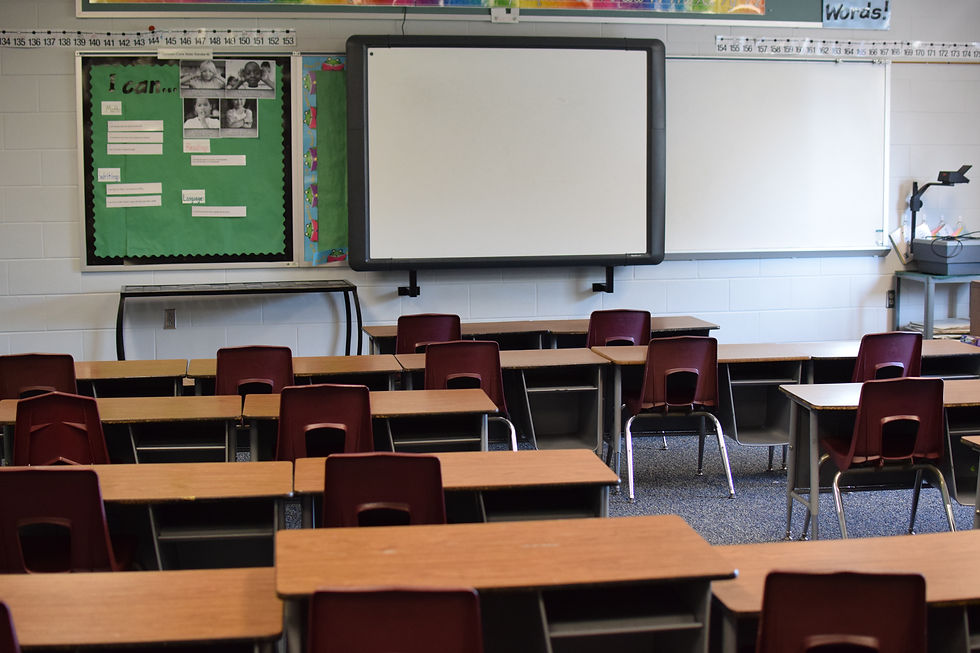
This picture shows a typical classroom at my school.
I have many textbooks and resources on display, that I would like to hide from view. Visually, the bookshelf is overwhelming. I would like to simplify it, which I think will make it more inviting to students.
In a study lead by Peter Barrett, it was found that six design parameters affected student learning in a significant way: color, choice, complexity, flexibility, connection, and light. I want my room to be a creative space that allows for movement and collaboration. I want to be able to access each student easily. Rows of desks can sometimes make it difficult for me to approach a specific student in a timely manner. I want to be able to move freely, and I want students to be able to move and access one another easily as well, which is why I incorporated ball chairs. I want to have space in my room that allows students to spread out and for these reasons, my classroom design includes round tables.
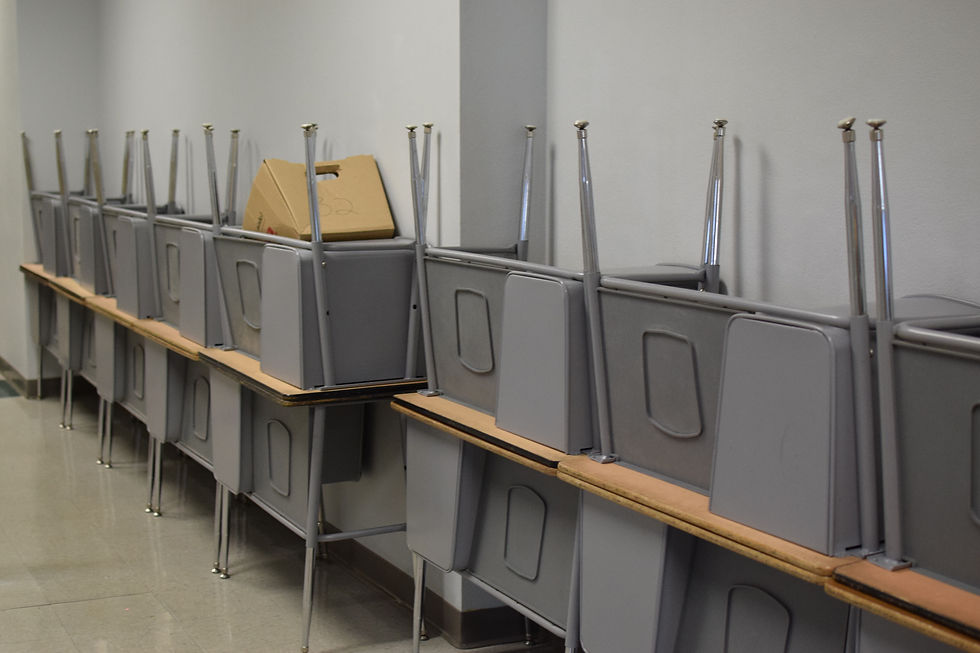
Getting rid of the big desks!
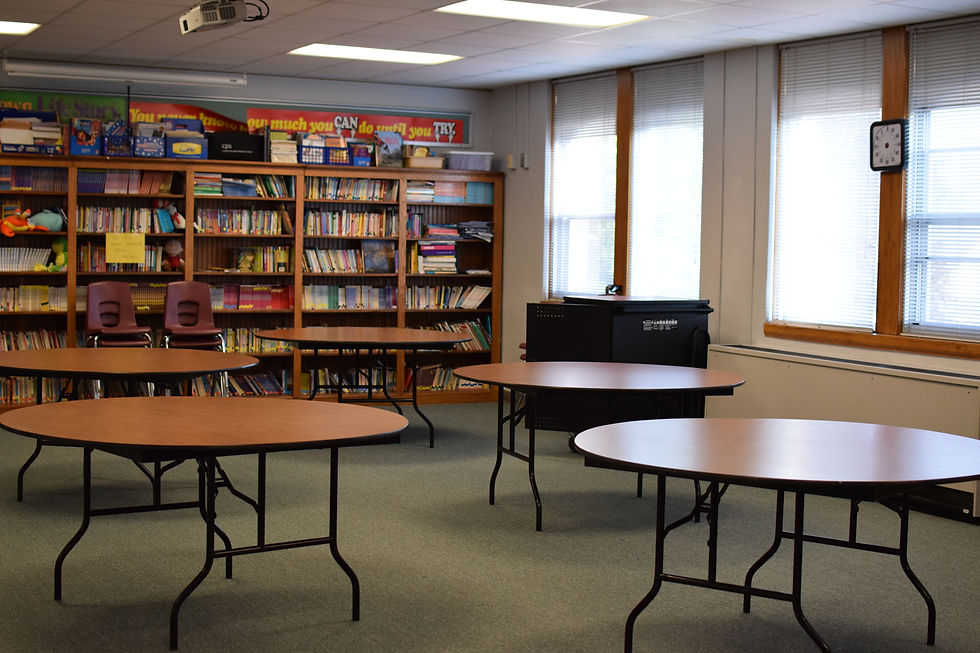
The above picture shows my classroom after moving the desks out and bringing the tables in!
Student chairs need to be flexible and allow for movement. Students need to be able to face the teacher during necessary direct instruction time. They also need to be able to adjust their seating to work collaboratively with their peers. Rows of desks do not provide this flexibility. Moving large desks that are filled with student belongings can be time-consuming, cumbersome, and even dangerous. Stationary, traditional, heavy desks do not provide the flexibility and movement that is required for a 21st Century classroom. If a teacher is using the Fisher and Frey Gradual Release Model as outlined in their book, Better Learning Through Structured Learning, the classroom setup must be flexible. I want students to be able to adjust their seating to work independently, in partners, or in groups. My classroom must be set up to allow for this variation.
Other factors that I would like to incorporate in my design include lots of open windows to allow for natural lighting, warm paint colors, and live plants. Barrett’s study found that all these elements support better student performance. I also would like a large television or projector along with a white board. Here are some photos of my design using SketchUp Make 2016.
classroomdesign3
All the changes together would not take much money. My school is already planning to provide me with a new television for my classroom. The round tables are already available for use. The paint would be about $100. The most costly element would be the ball chairs, at about $50 each.
References:
Barrett, P., Zhang, Y., Moffat, J., & Kobbacy, K. (2013). A holistic, multi-level analysis identifying the impact of classroom design on on pupils’ learning. Building and Environment, 59, 678-689. doi: http://dx.doi.org/10.1016/j.buildenv.2012.09.016
Fisher, D., Frey, N. (2008). Better Learning Through Structured Teaching: A Framework for the Gradual Release of Responsibility.
OWP/P Architects, VS Furniture, & Bruce Mau Design. (2010). The Third Teacher (1st ed.). Retrieved June 16, 2016, from http://static1.squarespace.com/static/509c0d15e4b058edb8f35a86/t/50f495b3e4b0c7661ad2ec2e/1358206387728/Ch2TTTforWeb.pdf
Van Gelderen, T. (2010, February 09). Tedde van Gelderen on Experience Design. Retrieved June 16, 2016, from https://www.youtube.com/watch?v=BB4VFKn7MA4





Comments